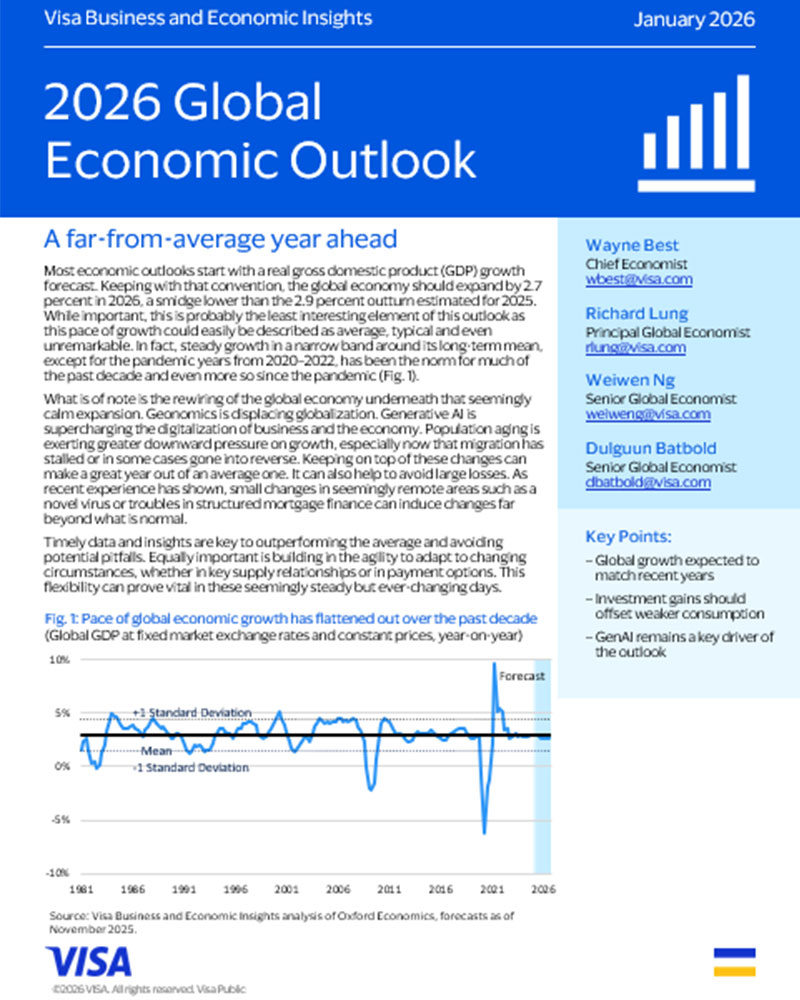
Most economic outlooks start with a real gross domestic product (GDP) growth forecast. Keeping with that convention, the global economy should expand by 2.7 percent in 2026, a smidge lower than the 2.9 percent outturn estimated for 2025. While important, this is probably the least interesting element of this outlook as this pace of growth could easily be described as average, typical and even unremarkable. In fact, steady growth in a narrow band around its long-term mean, except for the pandemic years from 2020–2022, has been the norm for much of the past decade and even more so since the pandemic.
What is of note is the rewiring of the global economy underneath that seemingly calm expansion. Geonomics is displacing globalization. Generative AI is supercharging the digitalization of business and the economy. Population aging is exerting greater downward pressure on growth, especially now that migration has stalled or in some cases gone into reverse. Keeping on top of these changes can make a great year out of an average one. It can also help to avoid large losses. As recent experience has shown, small changes in seemingly remote areas such as a novel virus or troubles in structured mortgage finance can induce changes far beyond what is normal.